Tambomachay is not just another archaeological site near Cusco. It is a place where the water never stops flowing, where silence echoes, and where the Incas talked to the gods through the stone and the stream.
A few kilometers from the city, hidden among green hills and Andean wind, this small but powerful place welcomes you with a different energy. It does not shout like Machu Picchu. It whispers. And if you stand still, you listen.
This blog takes you to know Tambomachay in depth: what to see, what it means, how to get there, its history, its secrets and why, even if your visit is brief, it can stay with you forever. No technicalities, no lists, no emojis. Just clear, heartfelt and useful words, so that you understand why this place deserves to be on your itinerary.
What is Tambomachay and why is it so special?
Tambomachay, also called “Baths of the Inca”, is an Inca ceremonial complex built to worship water. It was not a spa, as many believe because of its popular name. It was a sacred place, where priests and nobles performed purification rituals, offerings and ceremonies in honor of the deities of water and fertility.
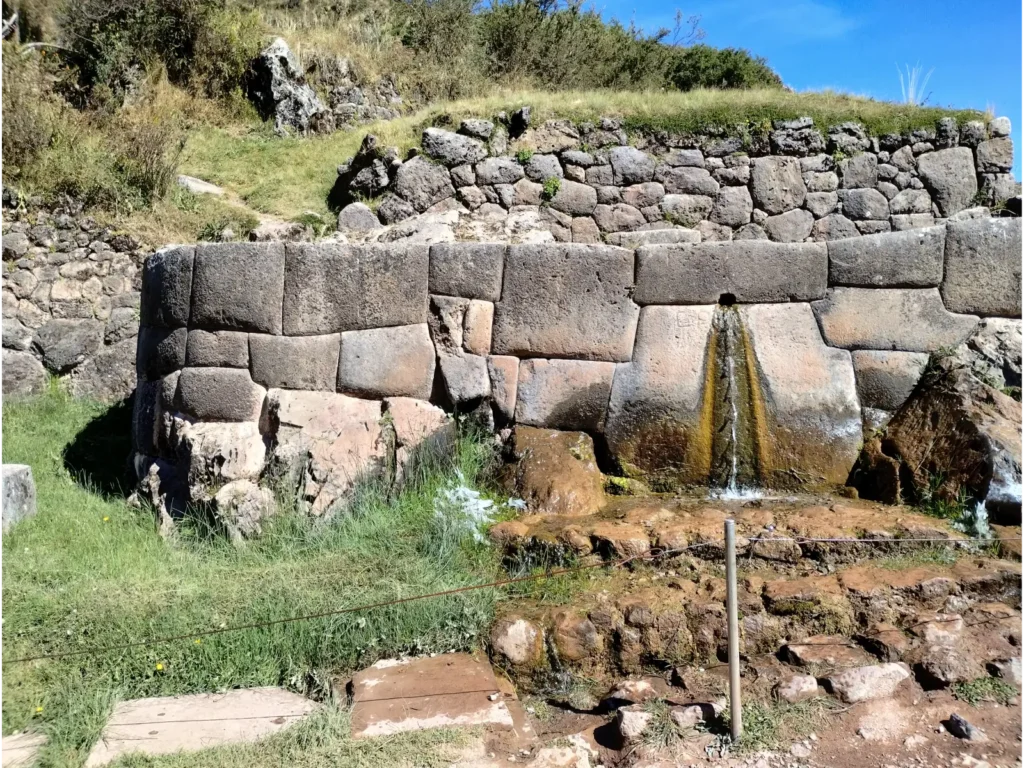
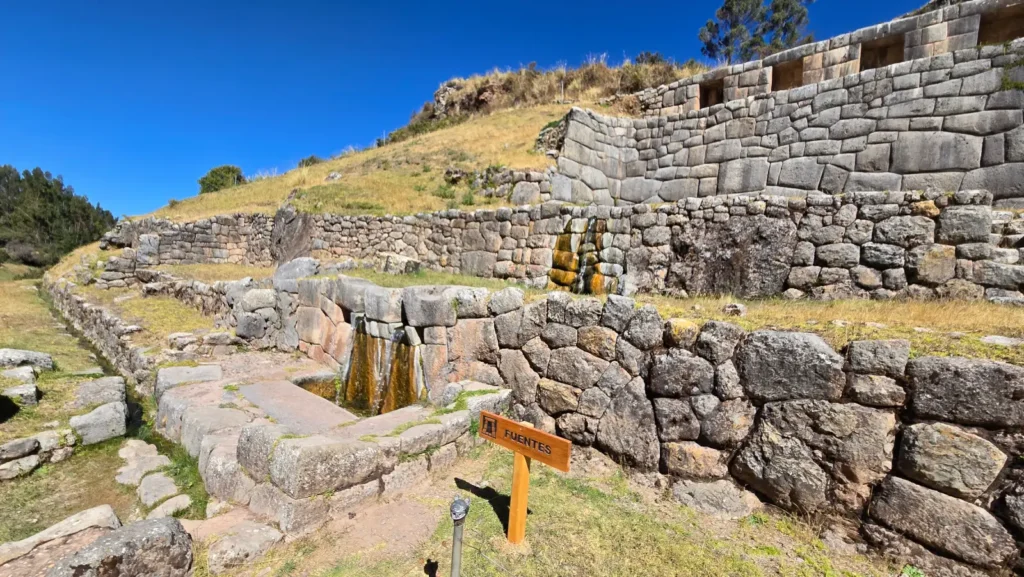
What is most surprising is that, after more than 500 years, the water continues to flow strongly through its stone canals, without pumps, without modern pipes, only with the perfect engineering of the Incas. The sound of the water is constant. Calm. Hypnotic. And that, in the middle of the silence of the hills, makes you feel that time has not passed.
What to see in Tambomachay: beyond the stones
The wall of the three windows and the sacred channel
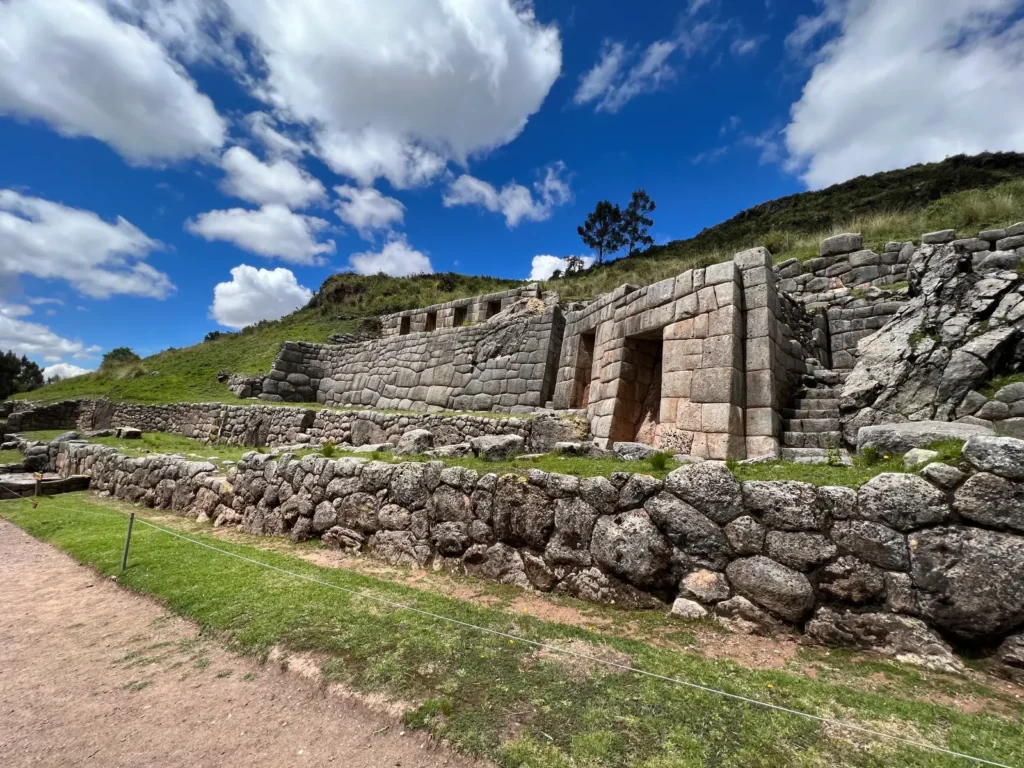
The main structure is a precisely carved wall with three niches or “windows” and a water channel that gushes out of the mountain and cascades in small waterfalls over stone steps. The water never stops. It never dries up. And most impressively, it never gets dirty. The Incas designed a natural filtering system with layers of stone and sand that keeps the water pure to this day.
The throne stone or ceremonial seat
Right next to the water wall, there is a large carved rock that looks like a seat. Many believe it was where the Inca or the high priest sat during ceremonies. If you sit there (respectfully), you feel the energy of the place. The wind changes. The sound of the water becomes clearer.
The walkways and retaining walls
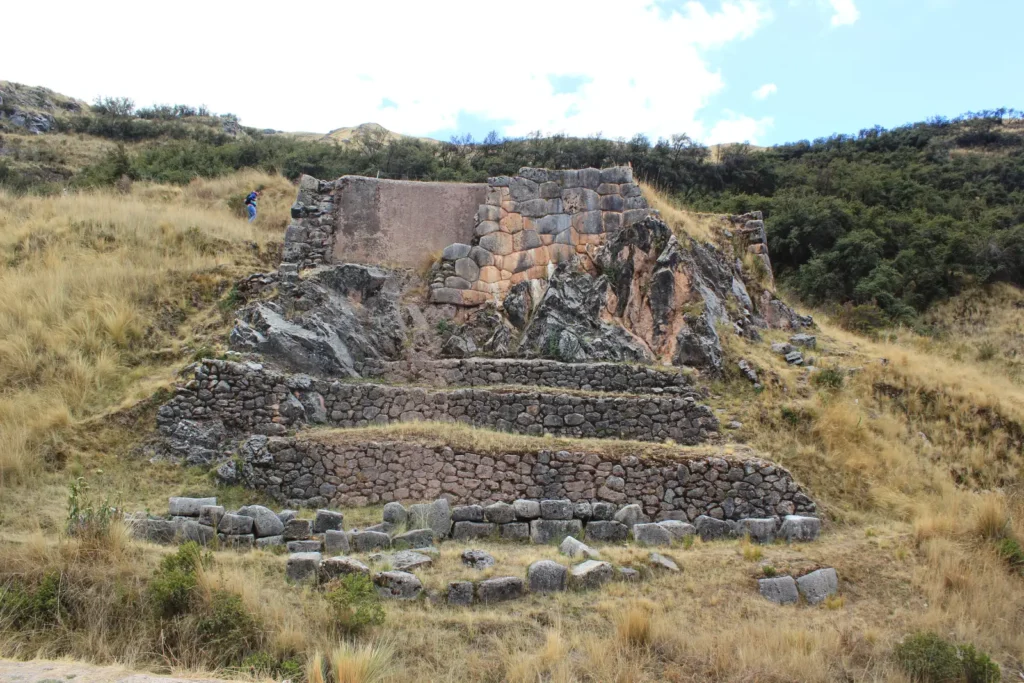
All around, you will see agricultural terraces and stone walls perfectly fitted, without mortar. They show the Inca mastery of architecture and integration with nature. They were not only functional: they were part of the ritual. Each stone, each level, had a spiritual and practical purpose.
The view of the valley and the sacred mountains
Tambomachay is on a hillside with a privileged view of the valley of Cusco and the surrounding hills. From there, the Incas watched the movement of the sun, the stars and the water. Today, you can do the same: sit, look, breathe. Feel small in front of something big.
The history and spiritual significance of Tambomachay
Tambomachay was part of a sacred circuit that included other sites such as Puca Pucara, Q’enqo and Sacsayhuaman. It is believed that it was a place of rest and purification for the Inca elite before participating in important ceremonies.
Its name comes from the Quechua: Tampu (place of rest) and Mach’ay (cave or place of reverence). Some also translate it as “resting place of the spirit”.
Water here was not just a resource. It was a living being. A deity. The Incas believed that water healed, cleansed the body and soul, and connected with the apus (mountain spirits). That is why every drop that falls in Tambomachay remains sacred to many people today.
How to get to Tambomachay from Cusco
Tambomachay is only 8 kilometers northeast of the city of Cusco. It is one of the most accessible archaeological sites.
Option 1: Half-day tour (recommended for first visit)
Many tours include Tambomachay along with other nearby sites: Puca Pucara, Q’enqo and sometimes Sacsayhuaman. They usually last half a day (morning or afternoon) and cost between 20 and 40 soles. They include transportation, guide and entrance fees.
Advantages:
- You have a historical and cultural explanation
- You don’t get lost among the sites
- Take advantage of the tourist ticket (see below).
Option 2: Taxi or public transport (for independent travelers)
You can take a cab from the Plaza de Armas in Cusco to Tambomachay. The trip takes 20-25 minutes and costs between 15 and 25 soles (return included if you negotiate). You can also take a colectivo or small bus that says “Cristo Blanco” or “Tambomachay” on Huayruropata Avenue.
Advantage:
- More freedom of schedule
- You can stay as long as you want
Disadvantage:
- You will not have a guide (bring information with you or download an audio-guide).
Schedules, tickets and tourist ticket
- Hours of operation: 7:00 a.m. to 6:00 p.m. daily
- Entrance: Individual tickets are not sold. Access only with the Cusco Tourist Ticket.
- Ticket types:
- Integral Ticket (130 soles): includes 16 sites, including Tambomachay, Sacsayhuamán, Pisac, Ollantaytambo, Moray, etc. Valid for 10 days.
- Partial Ticket I (70 soles): includes Sacsayhuaman, Q’enqo, Puca Pucara and Tambomachay. Valid 1 day.
Tip: If you are only going to visit the sites near Cusco, the Partial Bulletin I is more economical and sufficient.
Weather in Tambomachay and what to wear
The climate here is similar to Cusco: cold in the morning and evening, warm at midday, and strong wind in the afternoon. It is 3,700 meters above sea level, so protect yourself from the sun and the cold.
What to bring:
- Hat and sunscreen (the sun at high altitude burns)
- Windbreaker jacket (wind is constant)
- Water and light snacks
- Comfortable shoes (there are stairs and uneven terrain).
- Camera or cell phone with extra battery (the pictures with the water and the stone are amazing).
- Cash (for cab, tips or to buy handicrafts along the way)
Tips to experience Tambomachay with respect and depth
- Go early. Between 7 and 9 a.m. there are fewer people and the light is perfect for photos and to feel the energy of the place.
- Walk slowly. It is not a museum to go through quickly. It is a temple to feel.
- Do not touch the water with your hands if it is not necessary. Many still consider it sacred. If you want, just observe its flow.
- Keep silent. Turn off the music, lower your voice. Listen to the water. That is the true sound of Tambomachay.
- Respect the stones. Don’t climb on structures. Do not leave trash. Do not write or scratch anything.
- Sit down for a moment. Before leaving, find a quiet corner, close your eyes, take a deep breath and be grateful. This place deserves a break.
Why Tambomachay is not just another site, but a spiritual experience
Tambomachay does not impress by its size. It impresses by its essence. Here there are no giant temples or endless staircases. There is water that never stops. Stone that never moves. Silence that never breaks. And in that contrast, there is the magic.
The Incas understood something that today we forget: that the sacred is not in the great, but in the constant. In the pure. In what flows without asking permission. Tambomachay reminds you of that. It invites you to stop. To listen. To purify yourself, even for a few minutes, from the noise of the world.
You don’t need to believe in Inca gods to feel their presence here. It is enough to open your heart, leave aside the rush, and allow the water, the stone and the wind to do their work.
Combine your visit with other nearby sites
Tambomachay is just a few minutes away from other incredible places. If you have time, don’t miss them:
- Puca Pucara: Red fortress with panoramic view.
- Q’enqo: Labyrinth of tunnels and ceremonial altars carved in rock.
- Sacsayhuaman: Impressive complex with giant stone walls.
- Cristo Blanco: Viewpoint with the best view of Cusco (ideal for photos at sunset).
All can be visited in half a day. And they are all part of the same sacred history.