The Inca Trail is the 43 km (26.7 miles) trek that ends at the Sun Gate above Machu Picchu, and it is the only route that lets you walk into the citadel the way the Incas built it to be entered. It is also the most regulated trek in Peru: the Ministry of Culture caps the whole route at 500 permits per day, and most travelers discover far too late that this number does not mean what they think it means.
We are Local Trekkers Peru, a locally owned operator based in Cusco and licensed by the Ministry of Culture to run the Inca Trail. This guide covers the permit system first, because it decides everything else, then the itineraries, the difficulty, the altitude, the real cost, the porters, the ruins along the way and what to do if your dates are already gone. Each section links to a longer article if you want to go deeper.
What Is the Inca Trail?
The Inca Trail is a 4-day, 3-night trek along an original Inca road that runs from km 82 on the Cusco to Machu Picchu railway line, through cloud forest and over two high passes, to Machu Picchu itself. Total distance is 43 km (26.7 miles). The high point is Warmiwañusca, better known as Dead Woman’s Pass, at 4,215 m (13,828 ft). You sleep in campsites along the way, carry only a daypack, and eat food cooked on the trail by your crew.
What no alternative route can offer is the ending. On the final morning you leave camp before dawn, climb the last stretch to Inti Punku, the Sun Gate, and Machu Picchu appears below you all at once, from above, before the day visitors are up the hill. Every other trek finishes with a train to Aguas Calientes and a bus up the switchbacks. If that one moment is what you are booking for, nothing substitutes for it, as we explain in our guide to the Sun Gate and Inti Punku.
The trailhead at km 82 sits about three hours from Cusco by road, in the Sacred Valley near Ollantaytambo. If you want the exact geography of where the trek starts, where it ends and how the transfers work, see our guide to the Inca Trail’s start and finish points.
Permits: The Thing That Decides Your Whole Trip
Here is the single most useful thing a first-time traveler can learn about this trek.
The Ministry of Culture issues 500 permits per day for the entire route. That is not 500 tourists. The number includes every guide, porter and cook working the trail that day, from every company with a departure. Once the staff are allocated, roughly 190 to 210 spots remain for actual trekkers. That is the real daily ceiling.
This is why a date that looks wide open in October can be completely gone by April without you doing anything wrong. The tourist quota did not fill. The total quota did. Travelers who watch a public availability number tick down slowly, assume they have months of margin and then find the date closed are not being unlucky: they were reading the wrong number the whole time.
Two more rules follow from this and catch people out. Permits are nominative and non-transferable: they are bought in your name, with your passport number, and they cannot be resold, changed to another person or moved to another date.
And only agencies licensed by the Ministry of Culture can buy them, which means there is no way to book the Inca Trail independently, no matter how experienced a hiker you are. The step-by-step process, including what we need from you and when, is in our guide to how Inca Trail permits work and how to book one.
Before you commit to dates, it is worth checking current Inca Trail availability to see what is actually left.
One piece of good news: the permit includes your entrance to Machu Picchu. You do not buy that separately when you trek.
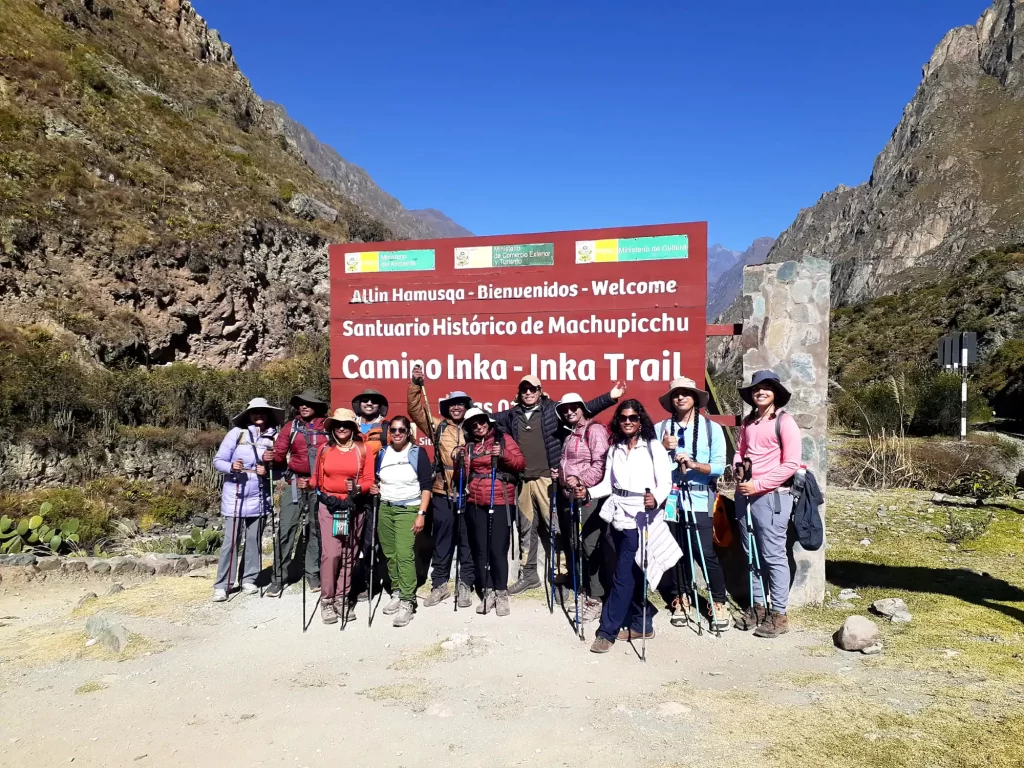

When Permits Are Released and When to Book
Permits for the following year are released in late October. That single release covers the entire year, and the most requested dates start disappearing within days of going live.
For high season, plan on booking 8 to 10 months ahead. For the dates people fight over, meaning the dry-season weekends, the last week of June around Inti Raymi, and anything in July and August, stretch that to 11 to 12 months. If you are reading this in January hoping to trek in July of the same year, you are late, though not always out of luck, and the availability page is the fastest way to find out.
To hold a permit we need your full name exactly as printed on your passport, plus passport number, nationality, date of birth and gender. Get any of it wrong and the correction has to go through the Ministry, which is slow and sometimes impossible close to the date. Our Inca Trail requirements page covers everything, including passports renewed between booking and travel.
Choosing a month is a separate decision from booking speed, and the tradeoffs are laid out in our guide to the best season for the Inca Trail.
Why the Trail Closes in February
The Inca Trail closes completely from February 1 to 28 every year. Nothing departs. This is not a soft closure or a weather-dependent one: it is scheduled maintenance on the route and the campsites, timed to the peak of the rainy season, when the trail takes the most damage and erosion work matters most. The trail reopens on March 1.
Machu Picchu itself stays open in February, so if your dates are locked, you can still visit the citadel by train and take a different trek before or after. The short 2-day route also closes, since it uses the same trail system.
The counter-intuitive part is what happens next. March is not a quiet month. Everyone whose February plans collapsed rebooks into early March, and the reopening dates fill fast, often with weather that is still firmly rainy. If you are considering the shoulder of the wet season, read our guide to the Inca Trail in January and February before you plan around it.
Itineraries: 2, 4 and 5 Days
The classic 4-day trek is the route this page describes and the one most people mean by “the Inca Trail.” Three nights camping, two passes, all the major ruins, and the Sun Gate arrival on the fourth morning. It is the best-selling version for a reason: it is the complete walk. You can see the daily breakdown, campsites and hiking times in our 4-day Inca Trail itinerary day by day, and the departure details on our Classic Inca Trail 4-day trek.
The short 2-day route starts at km 104 instead of km 82, covers the final stretch past Wiñay Wayna and reaches the Sun Gate on the first afternoon, with a night in a hotel in Aguas Calientes and Machu Picchu the next morning. It uses the same permit system and the same daily quota, so it books out too, though usually less brutally. It suits travelers short on days or unsure about camping, and it still delivers the Inti Punku arrival. Details are in our guide to the short 2-day Inca Trail and on the Short Inca Trail 2-day trek page.
The 5-day version walks the same 43 km (26.7 miles) as the classic, split across an extra day. Shorter daily distances, more time at the ruins, an additional night on the trail. It is the right call if you want the full route without the long days, or if you are traveling with a mixed-fitness group. See the 5-day Inca Trail trek for how the days divide.
Difficulty and Dead Woman’s Pass
The honest answer: the Inca Trail is moderately hard, and almost all of the difficulty lives in day 2.
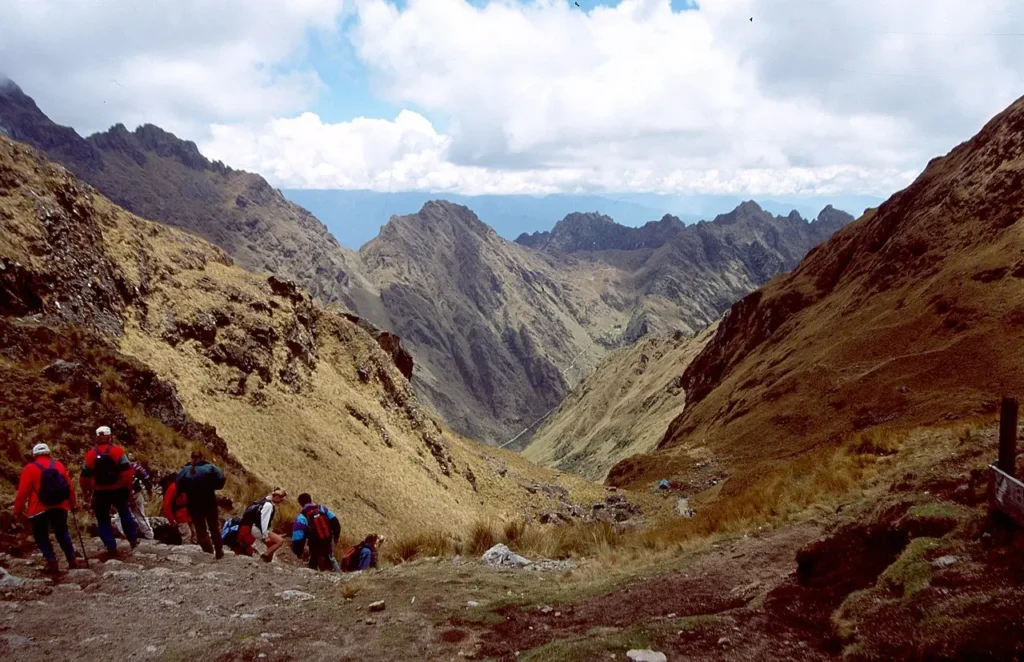
That is the day you climb to Warmiwañusca, or Dead Woman’s Pass, at 4,215 m (13,828 ft). It is a long, steady ascent on uneven Inca stone steps, at an altitude where you will be breathing hard well before your legs complain. No handrails, no chains, nothing technical: just a lot of steps, for a lot of hours, in thinner air than you are used to.
What surprises most people is that the descent hurts more than the climb. Coming down the far side of the pass, and again on the stone staircases later in the trek, is where knees and ankles take the punishment, and where most injuries on this route actually happen. We break down what makes each section hard in our guide to the Inca Trail’s difficulty and the stairs of death.
You do not need to be an athlete, but you do need to arrive able to walk uphill for five to seven hours without it being an emergency. Two or three months of regular hill walking and loaded day hikes changes how much of this trek you enjoy rather than endure, and our Inca Trail physical preparation guide sets out a realistic plan.
Altitude and Altitude Sickness
The numbers that matter: Cusco sits at 3,400 m (11,152 ft), Dead Woman’s Pass at 4,215 m (13,828 ft), and Machu Picchu at only 2,430 m (7,972 ft). Most travelers are surprised that the citadel is the lowest point of the whole trip. The trek gets easier, altitude-wise, as it goes on.
Plan 2 to 3 full days in Cusco before you start, doing very little on the first one. This is not padding your itinerary: it is the single most effective thing you can do to make day 2 manageable. Arriving in Cusco and starting the trek the next morning is how otherwise fit people end up struggling on the pass.
We are a trekking company, not a medical provider, so we do not give advice on medication. Talk to a travel medicine clinic or your own doctor well before you fly, particularly if you have heart or lung conditions or are pregnant. For the practical side, meaning how to pace your first days, what symptoms to watch for and when descending is the only correct answer, see our guide to altitude sickness in Cusco.

Cost and What’s Included
A complete package normally covers the permit and Machu Picchu entrance, transport from Cusco to km 82, a licensed English-speaking guide, the porter and cook team, camping equipment, all meals on the trail, and the return train and transfer.
What it almost never covers: sleeping bag and pole rental, the bus down to Aguas Calientes, hotels in Cusco, travel insurance, crew tips and drinks.
One warning worth taking seriously. The permit itself, the entrance fee, the train ticket and legally paid crew wages are fixed costs that no company can discount. When a quote comes in dramatically below the market, the saving is not coming from clever logistics. It is coming out of the porters’ pay, their food, their gear, or the size of your group. Our comparison of Inca Trail tour companies explains what to check line by line before you pay a deposit.
What to Pack
The short version, since your duffel and daypack both have weight limits:
- Your physical passport. This is the item that actually stops people. The name and number on it must match your permit exactly, and photocopies or photos on your phone are not accepted at the km 82 checkpoint.
- Broken-in hiking boots with ankle support and real tread.
- Layers: base layer, fleece, waterproof shell, warm hat and gloves. Nights at the high campsites can drop to around -5 °C (23 °F).
- Rain gear that works, whatever the season. This is cloud forest.
- Sleeping bag rated for cold nights (rented or your own).
- Headlamp, sunscreen, insect repellent, personal medication, refillable water bottle.
- Cash in small soles notes for tips and the odd drink at trail stalls.
Boots are the one purchase worth agonizing over, and our guide to choosing hiking boots covers fit and break-in time. On whether poles earn their weight, the answer for most people on this particular trail is yes, and we explain when in our article on trekking poles for the Inca Trail.
Food on the trail is better than almost anyone expects, and vegetarian, vegan, gluten-free and allergy requirements are handled routinely: see our guide to Inca Trail food and dietary restrictions.
The Porters: Weight Limits, Rights and Tipping
The porters are the reason this trek works. They carry the tents, kitchen, food and your duffel, move faster than you will, and have camp standing before you arrive. Peru regulates their conditions by law: a maximum load per porter, weigh-ins at official checkpoints, and requirements covering their food, sleeping arrangements and pay.
Tipping is customary and separate from the tour price. It is usually pooled at the end of the last night on the trail and divided between porters, cook and guide. How much, how it is normally split and how to hand it over without awkwardness is covered in our guide to Inca Trail porters, tips and ethics.
The Archaeological Sites Along the Way
This is not a walk through empty mountains with a ruin at the end. The trail passes a sequence of Inca sites that day visitors to Machu Picchu never see.
Runkurakay is a small circular structure on the climb to the second pass, most likely a way station. Sayacmarca, up a steep flight of stairs off the main trail, sits on a rock spur above two valleys. Phuyupatamarca, the “town above the clouds,” has ceremonial fountains still fed by their original channels. Wiñay Wayna is the finest of them: terraces stacked down a steep slope beside a waterfall, and the last major site before the Sun Gate.
We cover what each site was for in our guide to the Inca Trail archaeological sites, and how they sit along the route in the Inca Trail map. The trail also drops through several ecological zones, which is why orchids and hummingbirds turn up on the same trek: see our Inca Trail flora and fauna guide. On arrival, the circuit you are assigned inside Machu Picchu decides what you can actually walk, explained in our Machu Picchu circuits guide.
No Permits Left? The Alternatives
If your dates are gone, the useful reframe is this: the alternatives are not consolation prizes. They are different trips, and some travelers who could have had an Inca Trail permit choose them anyway.
Salkantay is the high-mountain option: bigger scenery, a higher pass, a glaciated peak in view for most of a day, and a long descent into cloud forest. Harder than the Inca Trail, and no permit needed. Start with our Salkantay trek guide, or go straight to the Salkantay vs Inca Trail comparison.
Lares is the cultural option: Quechua weaving communities, alpaca herders, hot springs and almost nobody else on the path. The quietest of the three, and the right pick if meeting people matters more to you than archaeology. See our Lares trek guide or the Lares Trek 4-day tour.
Inca Jungle is the active option: downhill mountain biking, rafting, zip-lining and hiking over 3 or 4 days, popular with travelers who do not want four days of pure walking. Read the Inca Jungle trek guide or the Inca Jungle 4-day tour.
The Inca Quarry Trail is the quiet 3-day alternative, past the Cachiqata quarry, covered in our Inca Quarry Trail guide. For everything that reaches Machu Picchu on foot, side by side, see our guide to alternative routes to Machu Picchu.


Frequently Asked Questions
Can I hike the Inca Trail without a guide? No. Independent trekking has not been permitted for years. Every trekker must go with an agency licensed by the Ministry of Culture, which is also the only way a permit can be purchased in your name.
Does the Inca Trail permit include entrance to Machu Picchu? Yes. Your trek permit covers your entry to the citadel. You do not need to buy a separate Machu Picchu ticket, though the bus down to Aguas Calientes afterwards is usually not included.
How fit do I need to be? Fit enough to walk uphill for five to seven hours on consecutive days. Regular hikers manage it comfortably. People who have not trained find day 2 genuinely hard, and no amount of enthusiasm substitutes for the hill work.
What happens if I cancel or get sick? Permits are nominative and non-refundable, and they cannot be transferred to another person or another date. This is why travel insurance that covers trip cancellation is worth having for this specific trek.
Can children do the Inca Trail? Many families do it, usually with the 5-day version or the short 2-day route. Altitude and long descents are the limiting factors, not distance.
Are there toilets and showers? There are basic toilets at the campsites and some checkpoints. Showers exist at one or two sites and are cold. Most people accept four days without one.
Is there phone signal or Wi-Fi? Patchy to none for most of the route. Tell people at home you will be offline until the afternoon of day 4.
Can I do the Inca Trail in February? No. The route closes completely from February 1 to 28 for maintenance, and reopens on March 1. You can still visit Machu Picchu by train that month.
How to Book with Local Trekkers
We are licensed by the Ministry of Culture to operate the Inca Trail, we are based in Cusco, and we buy your permit directly in your name as soon as your booking and passport details are confirmed. There is no reseller in between, and no waiting to see whether a middleman secures a spot.
Before you pay a deposit to anyone, including us, verify that the company is genuinely licensed and that the permit will be issued in your name and not a group placeholder. Our guide to choosing a Cusco trekking agency lists exactly what to ask and what the answers should sound like.
If your dates are set and you know which version you want, the Classic Inca Trail 4-day trek is where most people start.
No comments:
Post a Comment