Showing posts with label salkantay. Show all posts

Monday, July 20, 2026

Salkantay Trek Day by Day: Full 5-Day Itinerary Breakdown

Are you dreaming of hiking to the legendary Machu Picchu but want to avoid the overwhelming crowds of the classic Inca Trail? The Salkantay Trek is the ultimate alternative, offering wild landscapes, towering glaciers, and lush cloud forests. However, many travelers feel anxious because they don’t know exactly what to expect from the salkantay trek day by day. Knowing the physical demands and the stunning highlights of each stage is crucial for a successful journey. In this comprehensive guide, we will break down the entire adventure so you can step onto the trail with absolute confidence.

Essential Data: Prepare for the Journey

Before diving into the daily schedule, you must understand the environment you are about to conquer. Here is the vital information you need to plan your expedition effectively:

  • Altitud: Ranges from a low of 2,000 meters (6,561 feet) in the jungle to a maximum of 4,630 meters (15,190 feet) at the Salkantay Pass.
  • Clima: Extremely diverse. Expect freezing temperatures and biting winds in the high Andes, shifting to hot and humid conditions in the jungle.
  • Mejor temporada: The dry season runs from May to October, offering the best visibility and safest trekking conditions.
  • Dificultad: Challenging (4/5). It demands solid cardiovascular fitness and great mental endurance, especially on the second day.
  • Qué llevar: Sturdy, broken-in hiking boots, trekking poles, thermal base layers, a waterproof jacket, and strong DEET-based insect repellent.
Discover the Salkantay Trek Day by Day

Understanding the flow of the trail helps you pace yourself physically and mentally. Let’s explore the breathtaking salkantay trek route and what you will conquer from start to finish.

Day 1: Cusco to Soraypampa & Humantay Lake

Your adventure begins early as we drive from Cusco to the trailhead. The hike starts gently, winding through beautiful Andean valleys until we reach our first campsite at Soraypampa. In the afternoon, we tackle a steep but short acclimatization hike up to the stunning, turquoise waters of Humantay Lake. This night offers some of the best stargazing opportunities among all the salkantay trek camps, right at the base of the glaciers.

Day 2: The Mighty Salkantay Pass

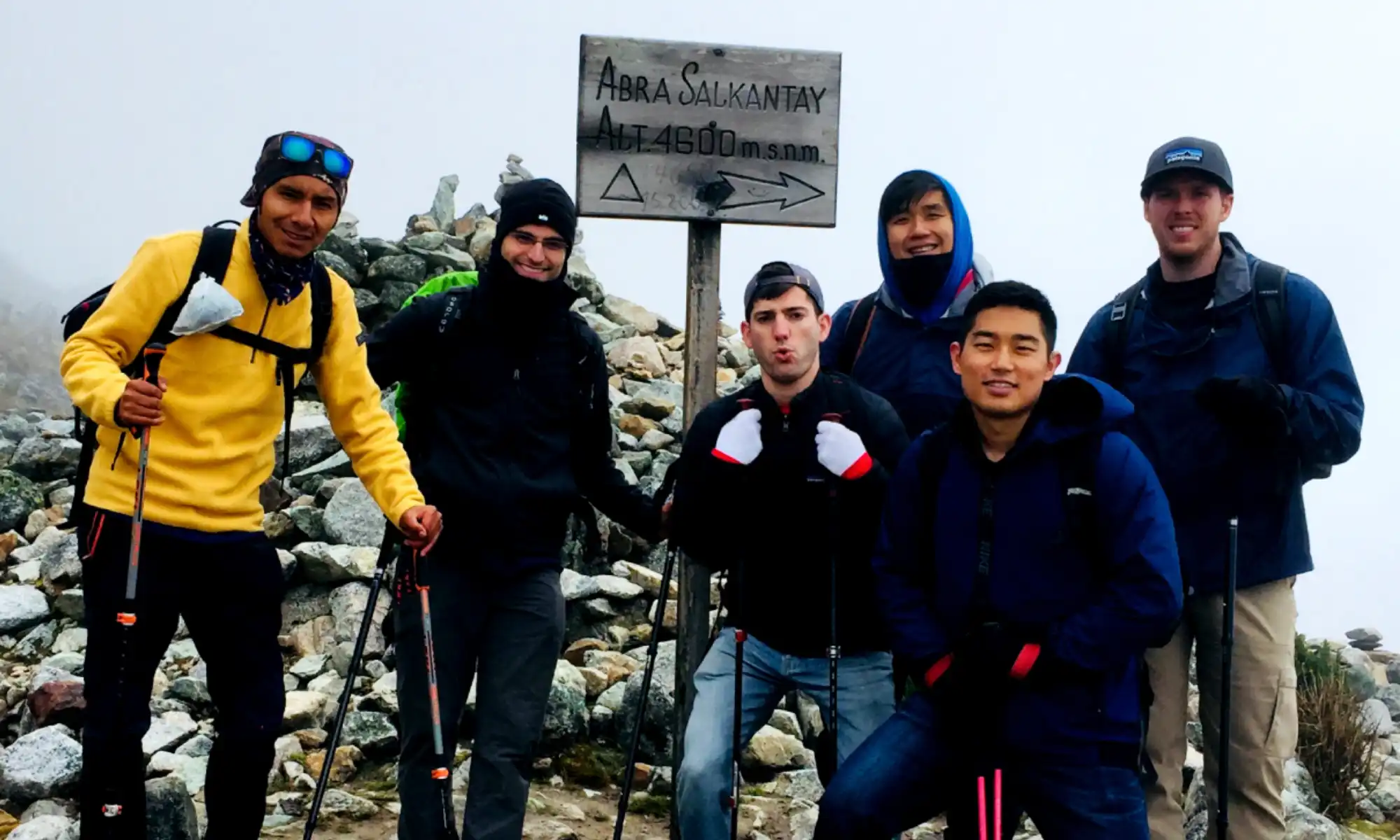
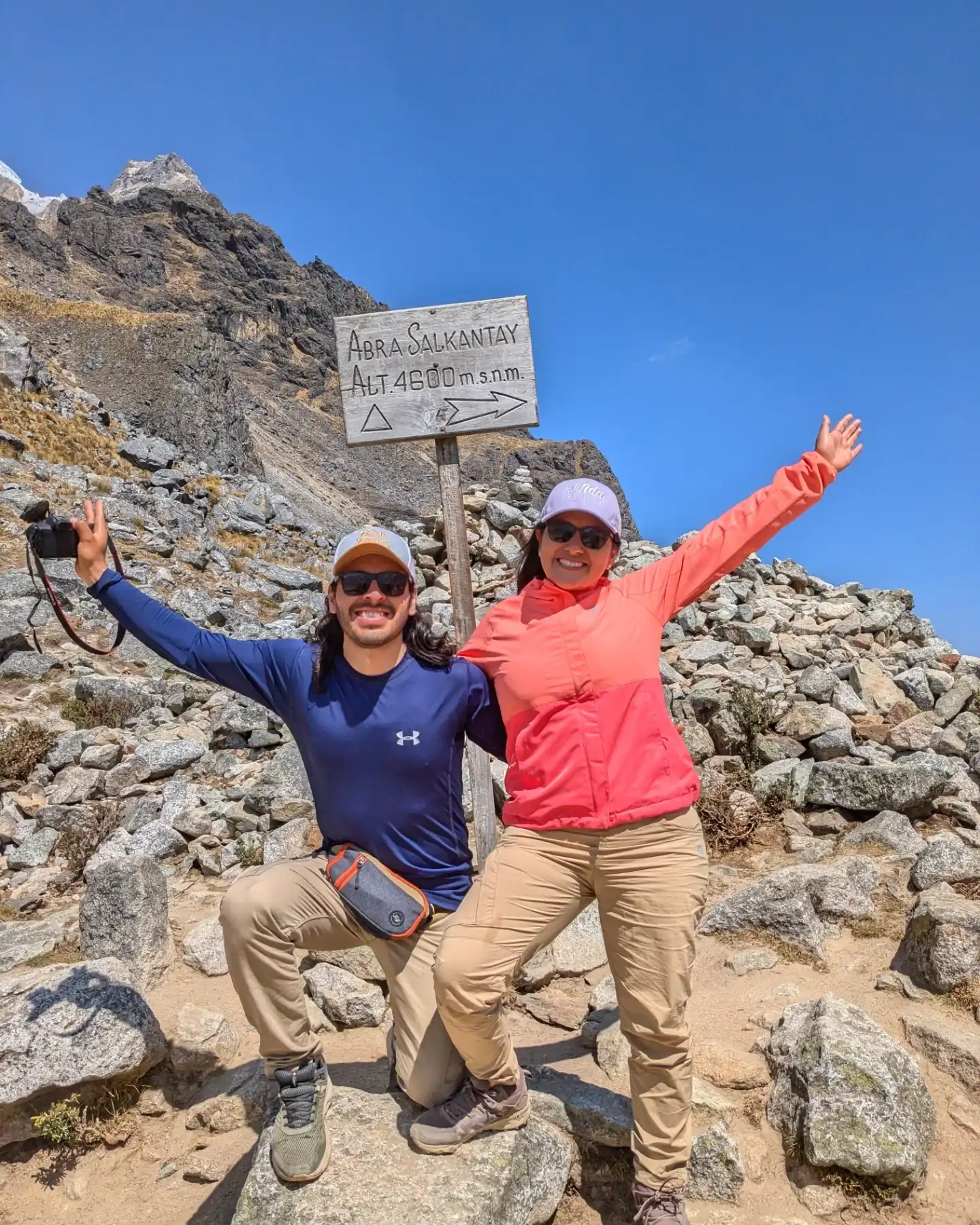
This is the most challenging and rewarding part of the salkantay trek day by day. We wake up before dawn and begin the grueling ascent to the Salkantay Pass at 4,630 meters. Standing face-to-face with the massive snow-capped peak of Mount Salkantay is an emotional and unforgettable triumph. After celebrating at the summit, we begin a long, steady descent into the warmer, thicker air of the cloud forest, resting at the Chaullay campsite.

Day 3: Entering the Lush Cloud Forest

Say goodbye to the freezing alpine tundra and hello to the vibrant Amazonian jungle! The trail levels out as we hike alongside rushing rivers and spectacular waterfalls. You will pass through local coffee, banana, and passion fruit plantations, enjoying a much more relaxed pace. By afternoon, we reach Lucmabamba, where you can finally rest your legs and even participate in a traditional coffee-roasting experience.

Day 4: Following the Inca Footsteps to Aguas Calientes

Today, we hike up to the recently cleared Inca ruins of Llactapata, which offer a rare, distant view of Machu Picchu from the backside of the mountain. After taking in this unique perspective, we descend steeply to the Hidroelectrica train station. From there, we enjoy a flat, scenic three-hour walk alongside the train tracks, finally arriving at the lively town of Aguas Calientes to sleep in a comfortable hotel.

Day 5: The Grand Finale at Machu Picchu

The climax of our salkantay trek itinerary 5 days begins before sunrise. We take one of the first buses up the zigzagging mountain road to enter the magnificent citadel of Machu Picchu. Your expert guide will lead you through the most important temples, terraces, and plazas, bringing the ancient Inca history to life. After soaking in the magic, you will return to Cusco by train, completing the adventure of a lifetime.
Consejos de Experto: Trek Like a Pro

As local experts who guide this route every single week, we want to share a few secrets to make your trek as enjoyable as possible:

  • Aclimatación inteligente: Spend a minimum of 2 to 3 full days in Cusco before your trek. This drastically reduces the risk of altitude sickness on Day 2.
  • Cuidado de los pies: Pack high-quality merino wool socks and blister tape. Treat any “hot spots” on your feet the very second you feel them, do not wait!
  • Gestión del equipaje: The jungle sections are incredibly humid. Pack all your extra clothes and sleeping bag inside heavy-duty plastic or dry bags within your main duffel.

Conclusion: Master the Salkantay Trek Day by Day

Trekking to Machu Picchu through the towering peaks of the Andes is an experience that will change you forever. By understanding the salkantay trek day by day, you can prepare your body, pack your bags correctly, and set your expectations for the incredible landscapes ahead. While the high altitude and long distances will challenge you, the immense reward of reaching the Lost City of the Incas is worth every single step.

Are you ready to take the first step towards the Andes? At Local Trekkers Peru, we handle all the logistics, safety equipment, and permits so you can focus purely on the adventure. Contact us today to review our premium Salkantay Trek packages and secure your spot on the trail!

Thursday, May 21, 2026

10 Main Differences Between The Classic Inca Trail And The Salkantay Trek

Peru offers some of the most impressive hiking trails in the world, highlighting two famous routes that lead to the majestic citadel of Machu Picchu: the Classic Inca Trail and the Salkantay Trek. Although both destinations culminate at the same archaeological treasure, the experiences they offer are remarkably different. This article explores the 10 main differences you should consider before choosing your Andean adventure.

1. History and Cultural Significance

Classic Inca Trail: Hiking the Inca Trail means literally walking through history. This route is part of the extensive network of roads built by the Incas that connected their vast empire. The path you walk today is the same one used by Incan messengers and leaders more than 500 years ago, preserving original structures, tunnels, and stone staircases.

Salkantay Trek: Although it also crosses Incan territory, the Salkantay is not a historical route in the same sense. It’s an alternative path that passes near the imposing snow-capped Salkantay mountain (6,271 m), a sacred mountain or “Apu” for Andean culture. Its cultural value lies more in the spiritual connection with nature than in archaeological vestiges.

2. Permits and Restrictions

Classic Inca Trail: Extremely regulated, with a strict limit of 500 people per day (including guides and porters). Permits frequently sell out 6-8 months in advance, especially for the high season (May-September). It is mandatory to hire an authorized agency, and independent hiking is not allowed.

Salkantay Trek: Does not require special permits nor is there a daily limit of hikers. It can be booked with little advance notice and even undertaken independently without a guide, although it is not recommended for inexperienced hikers due to logistical challenges and altitude.

3. Difficulty and Physical Demands

Classic Inca Trail: Moderately demanding, with a maximum altitude of 4,215 meters at Warmiwañusca Pass (“Dead Woman’s Pass”). The route includes numerous Incan staircases and elevation changes, but it is well-maintained and more accessible to intermediate-level hikers.

Salkantay Trek: Considerably more demanding, with a maximum altitude point of 4,630 meters at Salkantay Pass. It presents more rugged terrain, greater elevation changes, and more extreme weather conditions. It requires better physical condition and more experience in mountain hiking.

4. Duration and Distance

Classic Inca Trail: The standard route covers approximately 43 km and is typically completed in 4 days/3 nights. The itinerary is practically standardized with specific camping points.

Salkantay Trek: Longer, with approximately 72 km, generally completed in 5 days/4 nights, although shorter variants exist. It offers greater flexibility in terms of itineraries and rest points.

5. Landscapes and Ecosystems

Classic Inca Trail: Cloud forest and high mountain landscapes predominate, with greater emphasis on archaeological sites found along the way such as Wiñay Wayna and Intipata.

Salkantay Trek: Offers a greater diversity of ecosystems, from glaciers and high mountain plateaus to tropical cloud forests. The landscape contrast is more pronounced, notably featuring the imposing snow-capped Salkantay mountain.

6. Infrastructure and Amenities

Classic Inca Trail: Designated campsites with basic facilities. All provisions must be transported by porters. There is no access to electricity or phone signal, and sanitary facilities are very basic.

Salkantay Trek: Offers more varied accommodation options, from basic campsites to “sky lodges” and hostels in some sections. At certain points, there is access to electricity and even Wi-Fi. Some variants include a night in hotels in Aguas Calientes.

7. Tourist Traffic

Classic Inca Trail: Due to restrictions, it has a controlled but constant flow of tourists. The experience is less solitary, especially in designated campsites where several groups coincide.

Salkantay Trek: Although increasingly popular, it offers a more solitary experience due to the greater extension of the route and the dispersion of hikers. It is possible to find moments of true solitude, especially if you opt for less conventional schedules.

8. Cost and Service Options

Classic Inca Trail: Generally more expensive due to limited permits and high demand. Prices typically range from $550-850 USD for the standard tour. Service options are more homogeneous.

Salkantay Trek: Offers a wider price range, from budget options (around $350-400 USD) to luxury experiences with premium lodge accommodation (which can exceed $1,000 USD). Greater variety of options according to budget.

9. Arrival at Machu Picchu

Classic Inca Trail: The great emotional advantage of this route is the direct arrival at Machu Picchu through the Sun Gate (Intipunku) at dawn, offering the iconic panoramic view of the citadel illuminated by the first rays of the sun.

Salkantay Trek: Culminates in the town of Aguas Calientes, from where a bus is taken to Machu Picchu the next day. It does not offer the experience of discovering the citadel by walking from the heights.

10. Local Cultural Experience

Classic Inca Trail: Primarily focused on Incan history and archaeology. Contact with current local communities is limited due to the isolated nature of the trail.

Salkantay Trek: Offers more opportunities for interaction with contemporary Quechua communities, passing through small villages where traditional agricultural practices and current Andean lifestyle can be observed.

Conclusion

Both the Classic Inca Trail and the Salkantay Trek offer unforgettable experiences in the Peruvian Andes, but with clearly distinct approaches. The Inca Trail privileges historical and archaeological immersion in Incan civilization, while the Salkantay stands out for its natural diversity and physical challenge. The choice will depend on your priorities: if you value more the direct historical connection and special arrival at Machu Picchu, the Inca Trail is your option. If you’re looking for a more challenging adventure, with more diverse landscapes and less crowded, the Salkantay might be the best alternative.